Search results

A.-L. Becker, O. Gerber
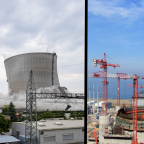
What happened last year in the field of nuclear energy? What developments can be observed internationally? The following overview shows the situation broken down by continent (Europe, America, Asia and Africa). Australia/Oceania is not included, as no nuclear power plants are operated there. After a brief summary, the countries that either operate reactors or are planning to start or are already building NPPs are presented for each continent.
U. Noseck, D. Becker, J. Flügge, A. Gehrke, K.-P. Kröhn, M. Kröhn, S. Spießl, J. Wolf

Countries around the world are looking for ways to dispose of heat-generating high-level radioactive waste. Spent fuel assemblies from nuclear power plants (NPPs) make up the largest part of this.
C. Heckötter, W. Stips, P. Terberger

Be it software updates, cloud services or external analysis platforms - modern IT systems rely on a large number of digital service providers. What brings efficiency also harbours new risks: This is because attackers can penetrate deep into well-protected systems unnoticed via an inadequately protected supply chain - even in safety-critical areas such as nuclear engineering. A new GRS research project looks at how such attacks unfold, which systems are particularly at risk, and how operators can protect themselves better.
C. Müller, E. Piljugin, J. Shvab

Electricity, heat, hydrogen – and new safety issues: GRS experts involved in international project on the use of SMRs in hybrid energy networks

Since the emergence of ChatGPT and similar technologies, artificial intelligence applications have become ubiquitous. There is now hardly any area of life or industry in which AI is not used, sometimes leading to far-reaching upheavals. In nuclear technology, too, AI is increasingly being used to support the development, operation and maintenance of nuclear installations as well as in the regulatory environment. The aim here is both to achieve efficiency gains and to enable the development of new technical approaches and methods. Since AI can intervene deeply in safety-relevant processes, issues of transparency, robustness – i.e. resistance to errors and unexpected situations – and regulatory compliance and integration are also of central importance.