Search results
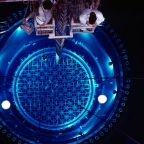
Previous fuel concepts in nuclear power plants with light-water reactors typically include uranium dioxide as fuel and cladding tubes made of a zirconium alloy. Accident Tolerant Fuel (ATF) refers to alternative cladding and fuel concepts designed to improve core behaviour under accident conditions compared to the current standard system, specifically, to tolerate the loss of cooling in the core for a longer period of time. The first ATFs have already been used on a trial basis in nuclear power plants, for example in Belgium or Switzerland. As part of a research project, GRS scientists investigated which concepts are currently being developed, how advanced they are and to what extent they could have mitigated the progression of real reactor accidents. The results show potential, but also challenges, and provide a sound basis for the further safety assessment of these new technologies.

T. Hollands, L. Tiborcz, T. Skorek, M. Junk, A. Wielenberg

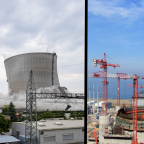
What happened last year in the field of nuclear energy? What developments can be observed internationally? The following overview shows the situation broken down by continent (Europe, America, Asia and Africa). Australia/Oceania is not included as no nuclear power plants (NPPs) are operated there. After a brief summary, the countries that either operate reactors or are planning to start or are already building NPPs are presented for each continent.
O. Bartos, F. Rowold, K. Hummelsheim
M. Röwekamp (Ed.), H.-P. Berg (Ed.)
A. Travleev
A. Rezchikova, J. Stuckert (KIT), J. Sievers, R. Kilger
Gesellschaft für Anlagen- und Reaktorsicherheit (GRS) gGmbH
Gesellschaft für Anlagen- und Reaktorsicherheit (GRS) gGmbH